
Your IT Team Is Good. Here’s How to Make It Great.
Key Takeaways:
Many Columbus and Central Ohio businesses have capable internal IT teams, but limited capacity prevents them from focusing on strategic initiatives. Co-managed IT services help organizations strengthen cybersecurity, improve efficiency, and accelerate business growth without replacing existing staff.
- Co-managed IT combines internal expertise with MSP resources to reduce workload and fill skill gaps.
- Frees IT teams to focus on cloud migrations, digital transformation, and strategic projects.
- Provides proactive monitoring, cybersecurity support, compliance assistance, and 24/7 coverage.
- Improves business continuity, operational efficiency, and security posture through documented processes and standardized systems.
- Delivers scalable IT support, vCIO guidance, and specialized expertise that aligns technology investments with business objectives.
Table of Contents
There is a particular kind of frustration that comes with having a capable IT team that never has time to do its best work. The help desk backlog stays full. Security reviews get pushed. Cloud migrations stay on slides. The people who know your systems best spend their days on password resets and printer fixes, while the projects that could actually move your business forward wait for a quieter week that never comes.
This is not an IT problem. It is a capacity problem. And for many Columbus and Central Ohio businesses, co-managed IT services are the practical fix.

What Co-Managed IT Services Actually Mean
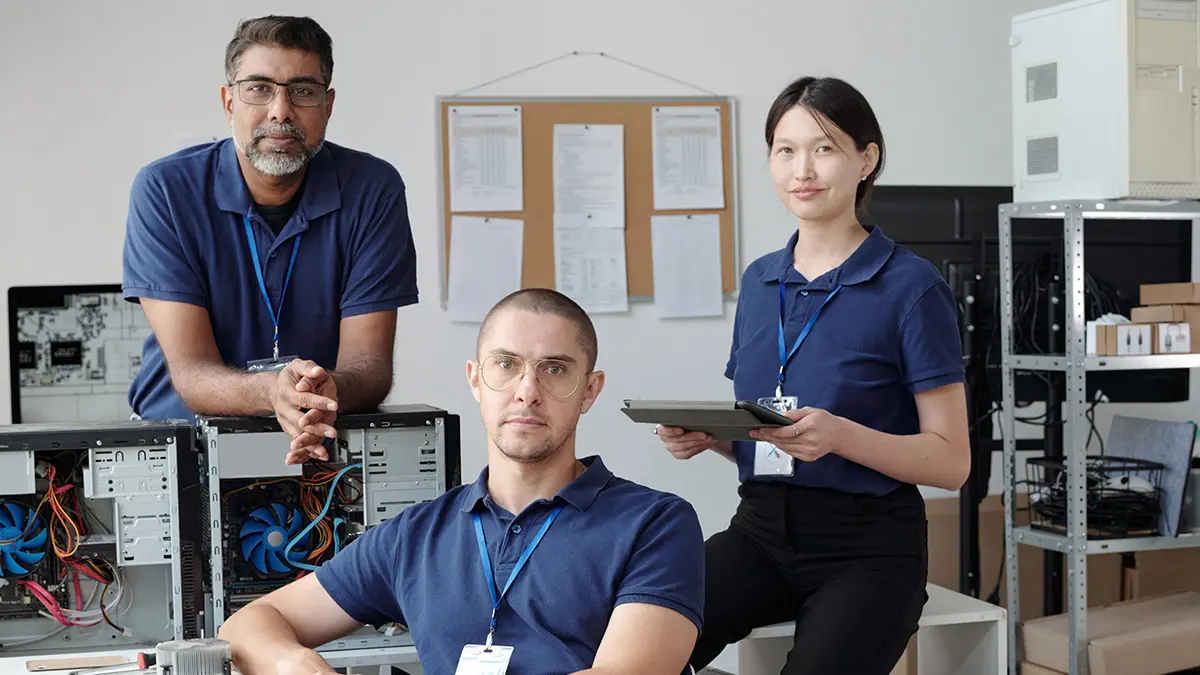
Co-managed IT services is a partnership between your internal IT team and an outside managed service provider (MSP). Rather than replacing your staff, the MSP works alongside them, sharing the load in whatever way makes the most sense for your business.
Your team keeps what it knows best: relationships with users, knowledge of core business applications, and day-to-day context. The MSP takes on the work that either falls outside your team's current skill set or simply never gets done because there are not enough hours.
That might look like the MSP handling 24/7 monitoring and patching while your IT lead focuses on a CRM rollout. Or the MSP providing cybersecurity expertise while your internal staff manages user support. The model is flexible by design.

What are Some of the Signs Your Internal Team Needs Backup?
Busy is normal. Chronically overwhelmed is a different problem. Here are the patterns that typically signal a co-managed arrangement would help:
- The same issues recur without a root-cause fix. Network outages, VPN failures, and slow systems get patched quickly to restore access, then reappear a few weeks later.
- Strategic projects stall indefinitely. Cloud migrations, backup improvements, and security upgrades stay on the roadmap but never move because daily support always takes priority.
- Security to-dos keep slipping. Multi-factor authentication (MFA) is partially deployed. Phishing training is overdue. Incident response plans exist in theory, but have never been tested.
- One or two people hold all the institutional knowledge. If your IT lead takes two weeks off, operations and security posture both become fragile.
- IT is seen as a bottleneck rather than a driver. Leadership has started routing around IT to get things done, which creates shadow IT risks and inconsistent systems.
None of these reflects poorly on your staff. They reflect a workload that has outgrown the team's current size and skill mix.

What Does a Co-Managed Partnership Deliver?
The right co-managed IT arrangement gives your team access to capabilities that would be expensive or impractical to build entirely in-house. In practice, that includes:
- Around-the-clock monitoring and proactive maintenance, so patches and updates happen on schedule, and problems are caught before they affect users.
- Specialized expertise on call. Cybersecurity, cloud infrastructure, and compliance skills are available when you need them without the cost of hiring each specialty full-time.
- Virtual CIO (vCIO) guidance to connect technology decisions to business objectives, help plan budgets, and keep IT roadmaps aligned with where your organization is headed.
- Documented processes and standardized systems that remove single points of failure and make your IT environment more resilient as the business grows.
- Scalable support that flexes with hiring cycles, new locations, acquisitions, or compliance requirements without triggering a full hiring process each time.
"Co-managed IT works best when both sides are honest about where the gaps are. Our job is not to come in and take over. It is to figure out where your team is being held back and remove those obstacles so they can focus on the work that actually moves your business forward."
– Rick Snide, CEO and Co-founder, Revolution Group
How Do I Close My Company’s Cybersecurity Gap Without Adding Friction?
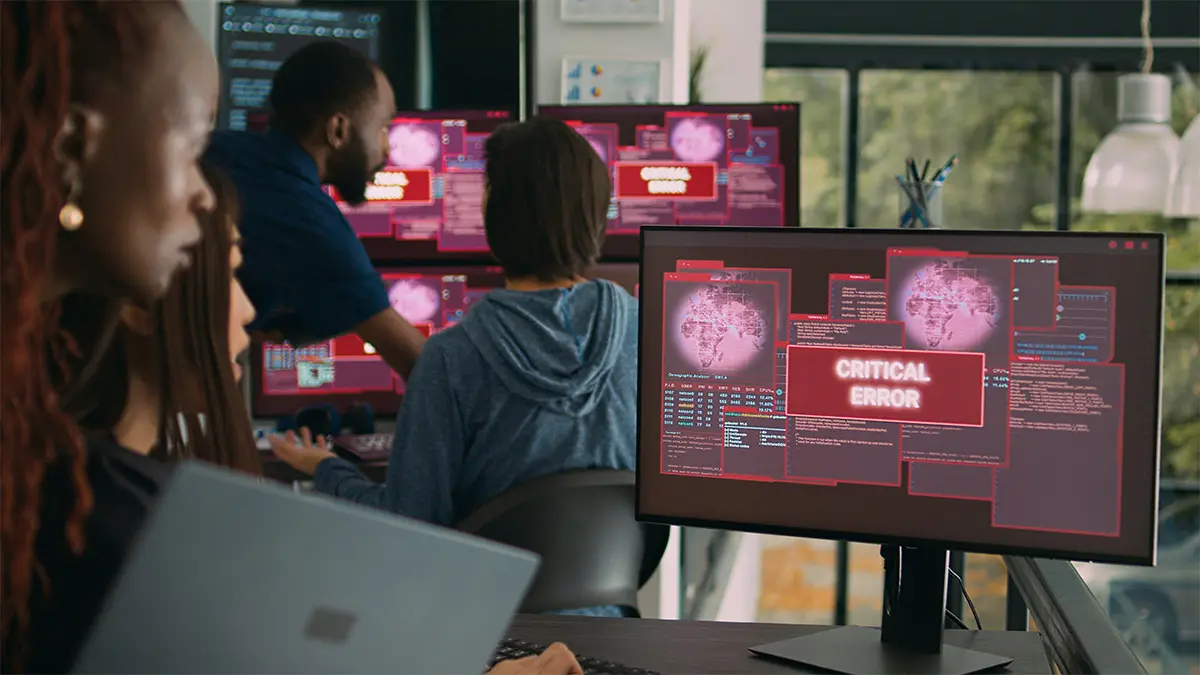
For most internal IT teams, cybersecurity is the category most likely to slip. The work is specialized, the threat landscape changes quickly, and daily support demands always feel more urgent than preventive security work. ISACA research found that 66% of IT and cybersecurity professionals say their roles are significantly more stressful than they were five years ago, with heavy workloads cited as the leading cause.
A co-managed model addresses this directly. Security tasks that tend to slip, such as patch management, backup testing, vulnerability scanning, and phishing simulations, become part of a regular, documented process rather than aspirational items on an overdue checklist.
For Columbus businesses in regulated industries, the stakes are higher still. Healthcare, financial services, and manufacturing companies face compliance obligations that require consistent execution, not best-effort coverage. A co-managed partner with MSSP capabilities can provide the threat detection, documentation, and audit readiness that internal teams rarely have bandwidth to maintain on their own.

Choosing the Right Co-Managed IT Partner in Columbus
Co-managed IT is only as good as the fit between your team and your partner. When evaluating providers, focus on a few things that actually matter:
- Clear division of responsibilities from day one. You should know exactly who handles what, how tickets are routed, and how urgent issues are escalated before you sign anything.
- Experience with businesses of your size and in your industry. A provider that understands the operational realities of mid-sized businesses in Central Ohio will ask better questions and make fewer assumptions.
- Security built into the service, not bolted on. Monitoring, backups, user training, and incident response should be standard, not optional add-ons.
- A local Columbus presence alongside strong remote capabilities. Most issues should be resolved remotely, but on-site support should be readily available when it is genuinely needed.
- Strategic planning as a standard part of the relationship, not an upsell. Technology roadmaps, budgeting support, and vCIO guidance should be included, not reserved for a higher tier.

A Practical Starting Point
If this situation sounds familiar, the most useful first step is an honest conversation with your IT lead. Ask what is consuming the most time, what keeps getting pushed, and where they feel least confident. The answers will tell you exactly where a co-managed partner can add the most value with the least disruption.
From there, many businesses start with a focused engagement: outsourcing monitoring and patching, or bringing in cybersecurity support, while keeping everything else internal. As the relationship matures and trust builds, the scope can expand naturally.
How do I Give My IT Team the Support It Deserves?
Revolution Group works alongside internal IT teams across Columbus and Central Ohio to close skill gaps, improve security posture, and get strategic projects moving. If your team is doing good work but running out of runway, we are glad to have a candid conversation about what a co-managed arrangement could look like for your organization.
Frequently Asked Questions
What are co-managed IT services, and how are they different from fully managed IT?
Co-managed IT services place an external managed service provider alongside your existing IT team rather than replacing them. With a fully managed model, the provider takes over all IT functions and your internal IT department steps back entirely. Co-managed support works differently: your in-house staff keeps ownership of the systems and relationships they know best, while the provider fills specific gaps in capacity or expertise. For Columbus businesses that have invested in building an internal team, co-managed IT services preserve that investment while extending what your team can actually do.
How do co-managed IT services help when an internal IT team's workload becomes unmanageable?
When internal staff are absorbing too much routine operational support, strategic and complex projects tend to stall indefinitely. Co-managed support is designed to absorb the volume that is crowding out higher-value work. That might mean the provider handles proactive monitoring, patch management, and help desk coverage while your team focuses on IT management decisions, vendor relationships, and infrastructure improvements. The goal is to protect your team's capabilities rather than paper over them.
Can co-managed IT services in Columbus help with advanced cybersecurity solutions?
Yes, and for many businesses, this is the most pressing reason to explore co-managed support. Cybersecurity is one of the areas most likely to slip when internal staff is stretched, yet it is also one of the most consequential. A co-managed partner with security expertise can provide threat detection, vulnerability management, user awareness training, and incident response planning as part of ongoing service. This is particularly important for Columbus-area businesses in healthcare, manufacturing, and financial services, where compliance obligations require consistent execution, not occasional attention.
What critical tasks can internal staff focus on when a co-managed partner handles operational support?
Offloading routine operational support to a co-managed service provider typically frees your internal team to focus on the work that moves the business forward: cloud migrations, application integrations, IT budget planning, security roadmaps, and supporting new locations or acquisitions. In practice, many IT leads find that co-managed arrangements give them room to function as genuine strategic advisors rather than a shared help desk. That shift tends to raise the visibility and credibility of the internal IT department across the organization.
Does co-managed IT mean giving up internal control of our IT infrastructure?
No. Internal control is a feature of the model, not something it compromises. Your team retains ownership of your IT infrastructure, vendor contracts, and day-to-day decisions. The service provider operates within boundaries that you define and document from the start. Most co-managed arrangements include shared tooling so that both your internal staff and the provider have full visibility into the same systems, with no black boxes. Remote support and desk coverage are delivered in a way that is transparent to your team, not a parallel operation running alongside it.
How do Columbus businesses gain a competitive advantage through co-managed IT services?
The competitive advantage comes from execution speed. Businesses with co-managed support can take on complex projects, respond to cybersecurity threats, and scale their IT infrastructure without waiting to hire specialists for each new requirement. For growing Columbus organizations, that agility matters. A co-managed model gives you access to a broader team's capabilities and institutional knowledge without the overhead of a fully built-out internal department, which means you can move faster and more confidently as your needs evolve.